Walk into any kitchen shop and you will find air fryers stacked high beside ovens that also promise "fan assisted" crispness. It is no wonder people are confused. The air fryer vs convection oven debate comes up constantly among home cooks, and the right answer depends less on marketing claims and more on how many people you feed, how much counter space you have, and what you actually like to cook. Here is a clear, practical comparison to help you decide.
How Each Appliance Works
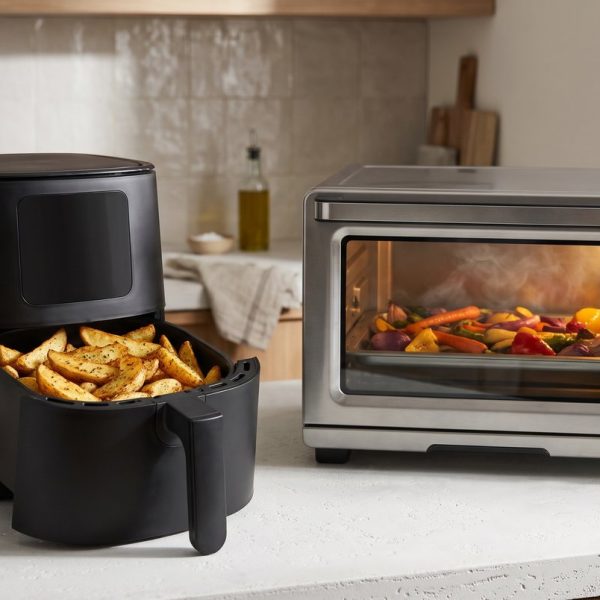
Here is the part the advertising rarely mentions: an air fryer is essentially a small, powerful convection oven. Both use a heating element and a fan to circulate hot air around food, which speeds up cooking and browns the surface. The difference is scale and intensity.
An air fryer packs its element and a strong fan into a compact chamber, usually between three and six litres for basket models. Food sits close to the heat in a perforated basket, so hot air hits it from every side. A convection oven, whether a full size built in model or a countertop version, moves air more gently through a much larger space. That makes it better at even, steady cooking and less aggressive at crisping.
Air Fryer vs Convection Oven: Speed and Results
For small portions, the air fryer is usually faster. It preheats in two or three minutes, compared with ten to fifteen for a full oven, and the intense airflow produces crunchy chips, chicken wings and roast potatoes with a fraction of the oil you would use in a deep fryer. Reheating leftover pizza or fried food in an air fryer is a revelation, as the crust comes back crisp rather than soggy.
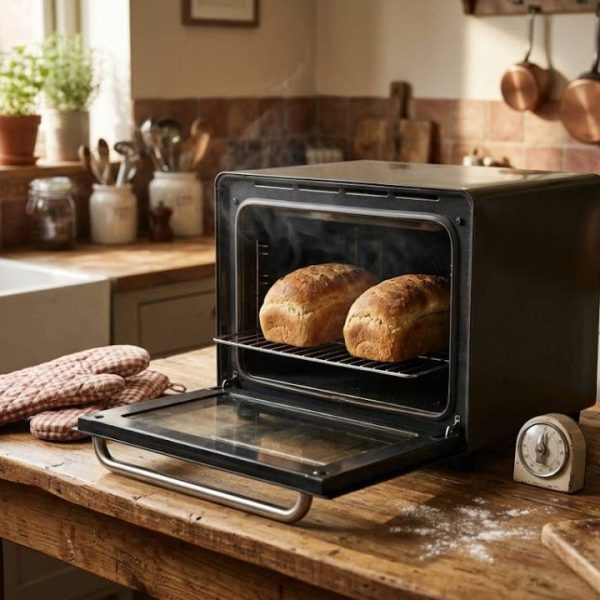
A convection oven shines when the job is bigger or more delicate. Baking a tray of biscuits, a whole chicken, a lasagne for six or two sheets of roast vegetables at once is simply not possible in a typical air fryer basket. Cakes and breads also tend to rise more evenly in an oven, because the gentler airflow does not dry out or overbrown the top before the middle is cooked.
Capacity, Space and Everyday Convenience
Capacity is where most buying decisions are made. A single person or a couple can cook most weeknight meals in a five litre air fryer, and many households end up using it more than their main oven. Families of four or more often find themselves cooking in batches, which cancels out the speed advantage.
Counter space matters too. Air fryers are bulky for their capacity, and dual basket models take up nearly as much room as a microwave. If your kitchen is small, a combination countertop oven with an air fry setting may be the smarter purchase, as it can toast, bake, roast and crisp in one footprint.
Cleaning favours the air fryer, mostly. Baskets and trays are usually nonstick and dishwasher safe, although the heating element above can collect grease over time and needs an occasional wipe once cool. Ovens are bigger to clean but get messy less often if you use lined trays.
Energy Use and Running Costs
Because it heats a small space quickly, an air fryer generally uses less electricity than a full oven for the same small meal. If you regularly cook for one or two, that saving adds up over a year. For large meals, though, running a single oven once is often more efficient than running an air fryer three times in a row. The cheapest appliance is the one sized to your typical portion.
What to Look for When Buying
For an air fryer, prioritise usable basket size over the headline litre figure, a temperature range up to at least 200°C, a clear and responsive control panel, and a basket that slides out smoothly. Windowed models let you check progress without interrupting cooking. Dual zone versions are useful for cooking a main and a side at the same time.
For a convection oven, check the interior dimensions against your favourite baking tray, look for a true third element fan rather than a fan alone, and read reviews about temperature accuracy. With imported appliances, take time to read the specifications carefully. Clear, properly localized product descriptions are a good sign that a brand takes its international customers seriously, while confusing translations often hint at weak after sales support too.
So, Which Should You Choose?
Choose an air fryer if you cook mainly for one to three people, love crisp textures, want quick weeknight meals and are happy to keep your oven for baking and big roasts. Choose a convection oven, or a combination model with an air fry function, if you feed a larger household, bake often, or are short on counter space and want one machine to do many jobs.
Whatever you buy, the appliance is only part of the story. The meals that matter most are the ones you cook again and again, and these home cooking habits are a lovely reminder of why time in the kitchen is worth investing in. Pick the tool that fits your routine, and you will use it every day.